
Role of Tax Efficiency – Why It Matters for Leeds Businesses
- David Rawlinson
- Jan 18
- 8 min read

Managing business finances in Garforth can feel complicated when balancing profitability with compliance. For small business owners and sole traders in Leeds, understanding tax efficiency is crucial not only for reducing liabilities but also for maintaining financial stability and staying on track with HMRC rules. This guide offers practical advice on minimising tax burdens through legal planning, harnessing digital tools, and selecting the right business structure—giving you confidence in handling tax matters effectively.
Table of Contents
Key Takeaways
Point | Details |
Tax Efficiency Strategies | Businesses should implement tax efficiency strategies such as expense management and understanding capital allowances to reduce their taxable profit legally. |
Importance of Business Structure | The choice of business structure can significantly impact a company’s tax obligations, with limited companies often benefiting from more flexible tax planning options. |
HMRC Compliance | Maintaining compliance with HMRC regulations is essential to avoid penalties, requiring robust record-keeping and timely submission of tax reports. |
Mitigation of Risks | Businesses should proactively implement compliance strategies like internal audits and regular reviews of financial processes to reduce the risk of tax-related issues. |
Tax efficiency defined for UK businesses
Tax efficiency represents a strategic approach businesses in the United Kingdom can utilise to manage their financial obligations effectively. At its core, tax efficiency means carefully organising business financial affairs to minimise tax liabilities while remaining fully compliant with Her Majesty’s Revenue and Customs (HMRC) regulations. Strategic tax management involves understanding and leveraging legitimate tax planning methods that help businesses pay precisely the right amount of tax.
For small and medium enterprises in Leeds and across the UK, tax efficiency is not about dodging tax responsibilities, but about making intelligent financial decisions. This approach involves carefully examining available tax reliefs, allowances, and credits to optimise the company’s financial position. Businesses can reduce their tax burden through legal strategies such as claiming appropriate business expenses, understanding sector-specific deductions, and structuring company finances strategically.
The fundamental principle of tax efficiency centres on legal tax planning that supports business growth. By working within established tax frameworks, companies can redirect potential tax savings into business development, employee training, or investment in new equipment. Corporate tax planning requires a nuanced understanding of UK tax legislation, ensuring businesses maximise their financial potential while maintaining full transparency and legal compliance.
Pro tip: Keep meticulous financial records throughout the year to make tax planning smoother and identify potential deduction opportunities before your annual tax assessment.
Key types of tax efficiency strategies
Businesses in Leeds and across the United Kingdom can leverage several strategic approaches to enhance their tax efficiency. Digital tax management tools have revolutionised how companies approach tax planning, enabling more precise and streamlined financial reporting. These strategies encompass a range of techniques designed to optimise tax positions while maintaining full compliance with HMRC regulations.
The primary tax efficiency strategies include expense management, strategic business structuring, and intelligent use of tax allowances and reliefs. Businesses can reduce their tax burden by carefully documenting and claiming legitimate business expenses, such as equipment purchases, travel costs, and professional development investments. Capital allowances provide significant opportunities for companies to offset taxable profits by claiming deductions for qualifying business assets, including machinery, vehicles, and technology investments.
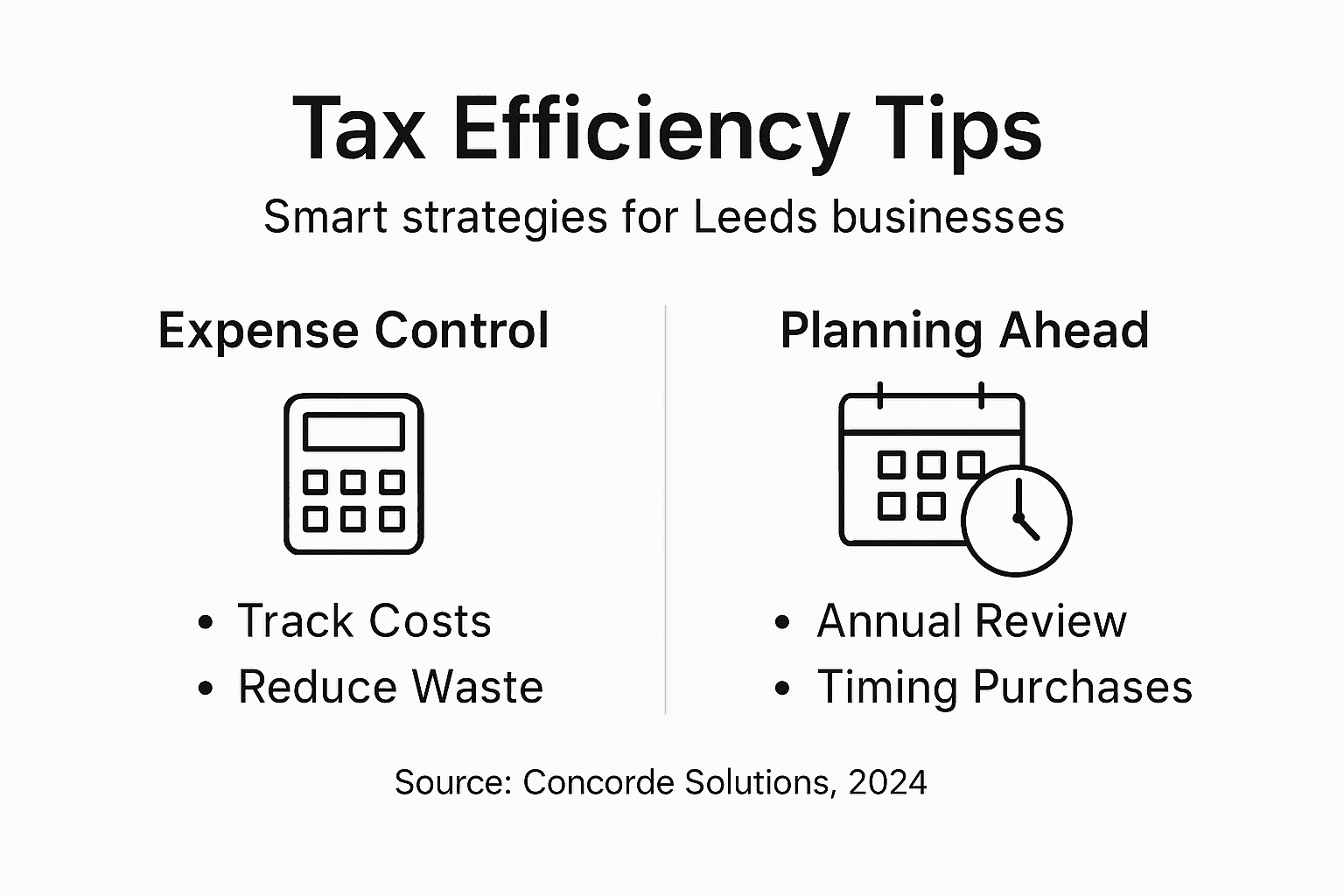
Another critical strategy involves timing of income and expenditure, which can significantly impact a company’s tax liability. By strategically planning when to recognise income or make significant purchases, businesses can smooth out their tax obligations and potentially reduce their overall tax burden. This might involve deferring income to a subsequent tax year or accelerating certain business investments to create additional tax deductions.
Pro tip: Consult with a qualified tax professional annually to review your current business structure and identify potential tax efficiency improvements specific to your industry and company size.
This table summarises key strategies for improving tax efficiency in UK businesses:
Strategy Area | Key Focus | Potential Benefit |
Expense management | Accurate claims | Lower taxable profits through allowable deductions |
Business structuring | Choosing optimal framework | Access to lower tax rates and flexible profit extraction |
Use of capital allowances | Asset investment timing | Offset taxable profit when purchasing business assets |
Digital tools adoption | Modern record keeping | Fewer reporting errors and easier HMRC compliance |
How business structure affects tax liability
The choice of business structure is a critical decision that directly impacts a company’s tax obligations in the United Kingdom. Legal business structure frameworks fundamentally determine how businesses calculate, report, and pay their taxes. Different structures such as sole traders, partnerships, limited companies, and limited liability partnerships (LLPs) each carry unique tax implications that can significantly influence a business’s financial strategy.

Sole traders, for instance, pay income tax on their business profits through their personal tax return, with rates directly tied to individual income levels. Partnerships distribute income among members, who then pay personal tax rates on their share of the profits. In contrast, limited companies operate as separate legal entities, paying corporation tax on their profits and potentially additional taxes on dividend distributions. This structural difference means that limited companies often have more complex tax reporting requirements but can also benefit from more flexible tax planning opportunities.
The tax efficiency of a business structure depends on multiple factors, including total annual turnover, profit levels, personal tax circumstances of owners, and long-term business growth objectives. Small businesses in Leeds might find that transitioning from a sole trader to a limited company structure could provide tax advantages, such as lower effective tax rates on profits and the ability to retain earnings within the company. The Companies Act 2006 provides the legal framework that governs these structural choices, ensuring businesses understand their tax responsibilities and compliance requirements.
Here is a comparison of common UK business structures and their tax implications:
Business Structure | Main Tax Type | Tax Reporting Complexity | Typical Tax Efficiency Considerations |
Sole Trader | Income tax | Simple | Direct profits, limited allowances |
Partnership | Income tax | Moderate | Shared profits, flexible profit split |
Limited Company | Corporation tax | Complex | Retained profits, dividend planning |
LLP | Income tax | Moderate | Liability limited, member flexibility |
Pro tip: Review your business structure annually with a tax professional to ensure you’re using the most tax-efficient model for your current financial circumstances.
HMRC compliance and legal requirements
Complying with HMRC regulations is a critical responsibility for businesses across the United Kingdom, requiring meticulous attention to detail and proactive financial management. HMRC compliance guidelines establish comprehensive expectations for tax reporting, record keeping, and transparent financial communication. These requirements cover multiple taxation areas including corporation tax, VAT, PAYE, and capital allowances, with significant penalties for businesses that fail to meet their legal obligations.
Businesses must maintain robust accounting systems that enable accurate and timely tax reporting. Digital record keeping has become increasingly important, with HMRC’s Making Tax Digital initiative mandating electronic submission and maintenance of financial records for many businesses. This approach aims to reduce errors, improve transparency, and streamline tax administration. Limited companies face more complex compliance requirements, including annual corporation tax returns, quarterly VAT submissions, and payroll reporting, which demand consistent and precise financial management.
The complexity of HMRC compliance varies depending on business size and structure. Larger and more complex businesses often receive dedicated support through Customer Compliance Managers who proactively help manage tax risks. Small businesses in Leeds must equally prioritise understanding their specific reporting requirements, which might include annual accounts submission, self-assessment tax returns, and maintaining comprehensive documentation of income, expenses, and business transactions. Failure to comply can result in financial penalties, potential legal investigations, and reputational damage.
Pro tip: Implement a robust digital record-keeping system and set calendar reminders for key HMRC submission deadlines to ensure consistent compliance.
Risks, common pitfalls and best practices
Navigating tax compliance requires understanding the most significant risks that can derail a business’s financial stability. Business Risk Review processes highlight critical areas where small businesses frequently encounter challenges, particularly around maintaining accurate financial records and meeting regulatory requirements. The consequences of overlooking these risks can range from financial penalties to potential legal investigations.
Common pitfalls for Leeds businesses include inadequate record keeping, misunderstanding tax deduction rules, and failing to separate personal and business expenses. Digital record management has become increasingly crucial, with HMRC placing greater emphasis on electronic documentation and transparent financial reporting. Businesses often struggle with complex tax regulations, particularly around VAT registration thresholds, payroll reporting, and understanding which expenses can be legitimately claimed. Small errors in documentation can trigger detailed investigations, potentially resulting in significant financial penalties and administrative burden.
To mitigate these risks, businesses should implement robust compliance strategies. This involves maintaining up-to-date accounting systems, regularly reviewing financial processes, and investing in professional training or external expertise. Proactive approaches include conducting internal audits, staying informed about changing tax regulations, and establishing clear financial reporting protocols. Developing a systematic approach to tax compliance helps businesses anticipate potential issues, reduce errors, and demonstrate transparency to HMRC.
Pro tip: Create a dedicated compliance calendar with all key HMRC deadlines and set reminders at least two weeks in advance to ensure timely and accurate submissions.
Unlock Tax Efficiency for Your Leeds Business with Expert Support
Navigating the complexities of tax efficiency can be overwhelming, especially when you face challenges like optimising business structure or managing digital compliance with HMRC. This article highlights how strategic tax planning and robust record keeping are essential for reducing tax liabilities legally and driving sustainable growth. If you want to avoid common pitfalls and maximise allowances such as capital allowances or legitimate business expenses, professional guidance is critical.

Take control of your business finances today by partnering with Concorde Company Solutions. Our Garforth-based team specialises in personalised accounting and tax services designed to help Leeds small to medium-sized businesses achieve true tax efficiency. From company tax returns and payroll management to tailored bookkeeping and software setup, we provide transparent pricing and dependable support that make compliance straightforward. Visit our website to discover how we can help optimise your tax position and ensure you never miss a crucial deadline. Ready to enhance your tax strategy and protect your business future? Contact Concorde Company Solutions now for expert advice and a personalised review.
Frequently Asked Questions
What does tax efficiency mean for businesses?
Tax efficiency refers to the strategic organisation of a business’s financial affairs to minimise tax liabilities while remaining compliant with regulations. It involves leveraging legitimate tax planning methods to ensure businesses pay the correct amount of tax.
Why is tax efficiency important for small businesses?
Tax efficiency is crucial for small businesses as it allows them to reduce their tax burden through smart financial decisions. This enables them to allocate savings towards growth initiatives, employee training, and investment in new equipment, ultimately supporting business development.
How can businesses improve their tax efficiency?
Businesses can improve tax efficiency by implementing strategies such as accurate expense management, financial structuring, timing of income and expenditures, and utilising available tax allowances and reliefs. Consulting with tax professionals can also provide tailored advice for specific circumstances.
What role does business structure play in tax liabilities?
The choice of business structure significantly impacts tax obligations. Different structures like sole traders, partnerships, and limited companies come with unique tax implications, affecting how profits are taxed and reported, which can influence overall tax efficiency.
Recommended


Very informative and well-structured article. I’ve recently looked into Companies999 for birmingham accountants and found similar useful explanations there.