
Streamline Payroll Management Workflow for UK Businesses
- David Rawlinson
- Jan 7
- 7 min read

Overlooking even one detail in payroll can lead to costly mistakes for british businesses. Garforth and Leeds business owners face complex tax rules and strict HMRC standards that demand careful attention. By understanding each step of the payroll process, you gain practical methods to safeguard your company, reduce stress, and keep every record accurate. Discover practical advice designed for busy leaders who want to maintain compliance and save valuable time.
Table of Contents
Quick Summary
Key Point | Explanation |
1. Gather all employee information accurately | Use a standardised template to collect vital data like names, tax codes, and earnings to ensure precise payroll processing. |
2. Choose compliant payroll software | Select software that integrates with HMRC, automates deductions, and simplifies reporting to maintain compliance and reduce errors. |
3. Implement thorough verification processes | Regularly review tax calculations and payroll submissions to ensure accuracy and compliance with HMRC regulations to avoid penalties. |
4. Maintain secure payslip distribution | Use encrypted digital methods for payslip delivery, ensuring confidentiality while providing employees with easy access to their payroll details. |
5. Store payroll records securely | Keep payroll data encrypted for a minimum of three years and restrict access to authorised personnel to protect sensitive information. |
Step 1: Assess payroll requirements and gather employee data
Launching an efficient payroll workflow begins with meticulously gathering and verifying employee information. Your first priority is collecting comprehensive data that supports accurate payroll data reporting across your organisation.
Start by creating a standardised employee information template that captures critical details such as full name, national insurance number, tax code, employment status, salary, and payment frequency. Request documentation like identification, bank details, P45 or P60 forms, and completed starter checklist forms from each employee. Ensure you understand their specific employment classification whether they are full-time, part-time, contractor, or temporary staff, as this impacts payroll calculations and tax contributions.
Carefully cross reference the gathered information against PAYE Real Time Information requirements to confirm data completeness and accuracy. Maintain secure digital or physical records that protect employee privacy while ensuring quick accessibility for payroll processing.
Practitioner Tip: Create a digital checklist with mandatory fields to prevent incomplete employee data submissions and reduce administrative follow-up time.
Here is a summary of essential employee information fields and why they matter:
Data Field | Why It Is Important | Impact on Payroll Accuracy |
National Insurance Number | Confirms unique employee identity | Ensures correct NI contributions |
Tax Code | Determines appropriate tax deductions | Prevents under or over tax payment |
Employment Status | Defines eligibility for benefits | Influences tax and NI calculations |
Payment Frequency | Sets regularity of pay runs | Affects statutory reporting schedules |
Salary/Hourly Rate | Basis for gross pay calculation | Impacts total pay and benefits owed |
Step 2: Set up payroll software and configure HMRC integration
Navigating the complex world of payroll software requires careful selection and configuration to ensure seamless HMRC compliance. Your goal is to choose recognised payroll software that meets all statutory reporting requirements while simplifying your administrative processes.
Begin by registering as an employer with HMRC and researching software options that integrate directly with their systems. Look for solutions that can automatically generate Full Payment Submissions (FPS), calculate tax deductions, and submit Real Time Information reports accurately. During setup, you will need to input company registration details, employee information, and configure your specific payroll parameters such as payment frequencies, tax codes, and national insurance contributions.
Ensure your chosen software provides comprehensive reporting capabilities, data security features, and direct digital communication channels with HMRC. Take time to thoroughly test the system with sample data before processing actual payroll to verify all calculations and submission protocols are functioning correctly.
Practitioner Tip: Schedule an initial training session with your software provider to understand advanced configuration options and potential integration challenges before go-live.
Step 3: Input payroll information and process pay runs accurately
Accurate payroll processing demands meticulous attention to detail and comprehensive understanding of employee payment calculations. Your primary objective is to ensure every employee receives precise compensation while maintaining full compliance with tax and national insurance regulations.
Begin by carefully inputting each employee’s specific payment details into your payroll software. This includes base salary, overtime hours, bonuses, commission, and any additional compensation elements. Systematically review individual records to verify working hours, apply correct tax codes, and calculate mandatory deductions such as national insurance contributions, pension schemes, and potential student loan repayments. Pay special attention to variations in payment structures for different employment types such as full-time, part-time, and contract workers.

Before finalising the pay run, conduct a thorough cross-check of all calculations using HMRC submission guidelines to confirm accuracy. Generate comprehensive payslips that clearly break down gross pay, individual deductions, and net earnings. Ensure all digital records are securely maintained and ready for potential future audits.
Practitioner Tip: Create a standardised pre-payroll checklist with key validation steps to catch potential errors before final processing.
Step 4: Verify tax calculations and ensure HMRC compliance
Ensuring precise tax calculations and maintaining HMRC compliance is critical for protecting your business from potential financial penalties. Your fundamental goal is to implement rigorous tax reporting processes that meet all statutory requirements with absolute accuracy.
Carefully review every tax calculation by cross referencing individual employee records, verifying tax codes, and confirming National Insurance contribution rates. Pay special attention to nuanced scenarios such as multiple income streams, variable working hours, and different employment classifications. Systematically validate each element of the payroll submission including gross earnings, tax deductions, pension contributions, and statutory payments to guarantee comprehensive alignment with current HMRC compliance standards.
Establish a multi stage verification process that includes automated software checks and manual review by a qualified professional. Maintain meticulous digital records of all calculations and submissions, ensuring you can provide comprehensive documentation in the event of an audit. Regularly update your understanding of current tax regulations and reporting requirements to prevent inadvertent non compliance.
Practitioner Tip: Implement a quarterly internal audit of payroll calculations to proactively identify and rectify potential compliance issues before HMRC review.
Step 5: Distribute payslips and maintain secure payroll records
Ensuring accurate and secure payslip distribution is fundamental to maintaining professional and legal payroll practices. Your objective is to implement a robust system for employee payroll documentation that protects sensitive information while meeting all statutory requirements.
Choose a distribution method that balances convenience and confidentiality. Digital payslips sent through encrypted company email or secure employee portals offer enhanced security and immediate accessibility. If using paper payslips, develop a controlled distribution process that guarantees each employee receives their document privately. Ensure all payslips comprehensively detail gross earnings, individual tax deductions, national insurance contributions, and net pay, providing complete transparency for your workforce.
Compare popular payslip distribution methods for security and efficiency:
Distribution Method | Security Level | Employee Access | Administrative Burden |
Digital (encrypted) | High, with encryption | Instant, online portals | Minimal manual handling |
Company Email | Moderate, depends on policy | Immediate, anytime access | Low, automated via system |
Paper (in person) | Variable, risk of loss | Delayed, physical handover | High, requires manual distribution |
Maintain meticulous payroll data protection protocols by implementing strict digital and physical record management strategies. Store payroll records securely for a minimum of three years, utilising encrypted digital storage systems or locked physical filing cabinets. Restrict access to payroll information to authorised personnel only, and establish clear data handling procedures that comply with UK GDPR and HMRC regulations.
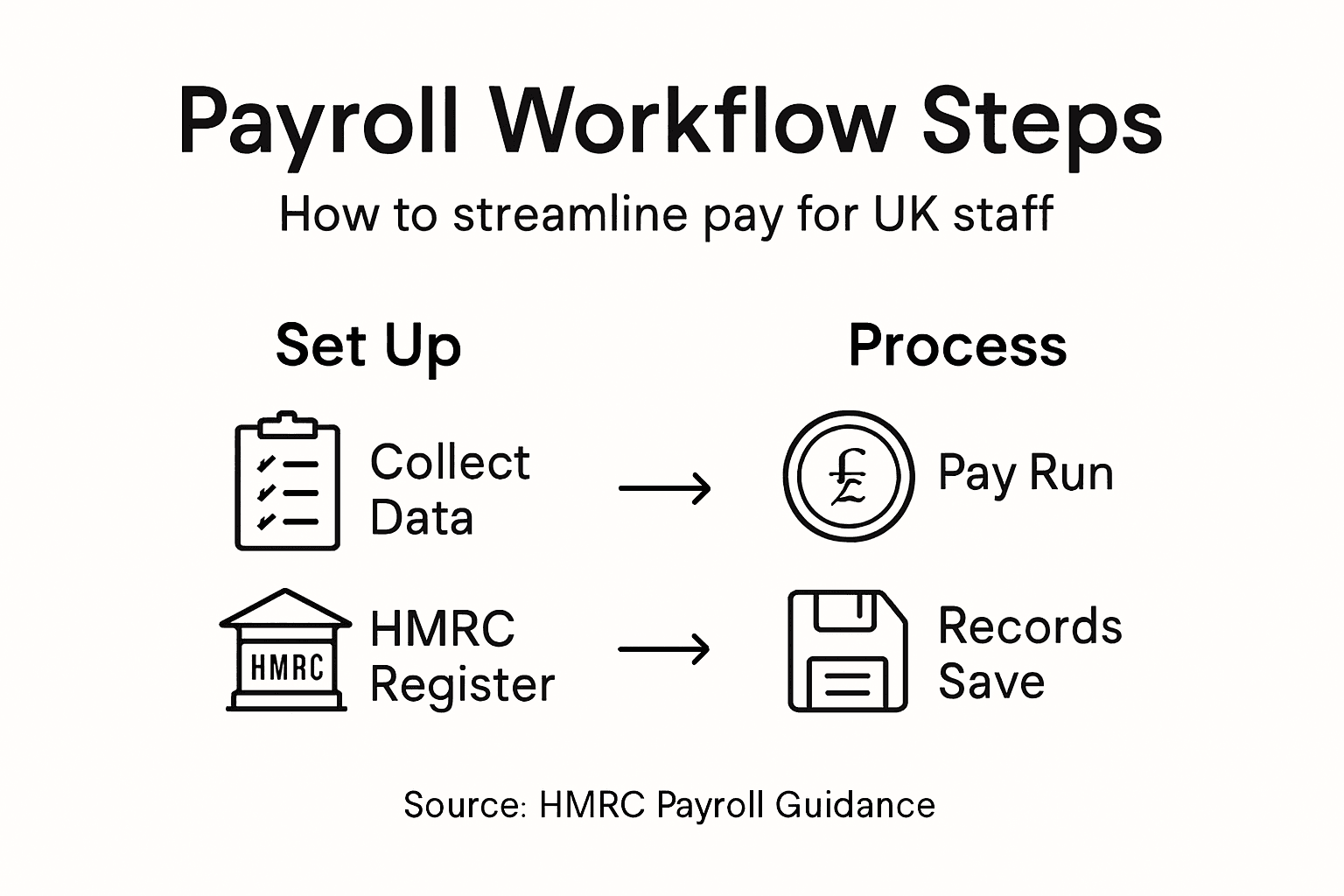
Practitioner Tip: Implement a digital document management system with multi factor authentication to enhance the security of your payroll records and simplify long term storage.
Simplify Your Payroll Management with Expert Support from Concorde Company Solutions
Managing payroll accurately while ensuring full HMRC compliance can feel overwhelming, especially when handling complex tax calculations, employee data collection, and secure payslip distribution. The challenge of staying up to date with Real Time Information reporting and tax regulations demands a trusted partner skilled in both payroll software setup and ongoing processing.
Concorde Company Solutions in Garforth, Leeds specialises in tailored payroll management services designed to relieve these pressures for UK businesses. From thorough employee data verification to seamless HMRC integration and secure documentation, our dedicated team ensures your payroll workflow is efficient and error free. We place a strong emphasis on personalised support to address your unique business needs while safeguarding sensitive financial information.
Take control over your payroll process today and experience peace of mind with experts committed to your compliance and accuracy. Discover how we can transform your payroll operations by visiting our website at Concorde Company Solutions.

Looking for a comprehensive solution that covers all aspects of payroll management including software configuration and statutory reporting Reach out now to receive personalised guidance and transparent pricing from a partner focused on your long term financial success. Explore more about our services at Concorde Company Solutions and start streamlining your payroll workflow with confidence.
Frequently Asked Questions
How can I gather comprehensive employee data for payroll?
Start by creating a standardised employee information template that includes essential details such as full name, National Insurance number, tax code, employment status, salary, and payment frequency. Collect necessary documentation from each employee, and ensure that their information is accurate and complete.
What payroll software should I choose to ensure HMRC compliance?
Select payroll software that is recognised by HMRC and meets all statutory reporting requirements. Look for features that allow for seamless integration with HMRC systems and can automatically generate Full Payment Submissions (FPS).
What steps should I follow to process pay runs accurately?
Input each employee’s payment details into your payroll software, ensuring correct calculations for salary, overtime, and additional compensation. Conduct a thorough cross-check against HMRC submission guidelines before finalising the pay run to ensure accuracy.
How do I verify tax calculations for compliance?
Carefully review all tax calculations by cross-referencing employee records and verifying tax codes. Implement a multi-stage verification process involving both automated and manual checks to ensure that all calculations align with current compliance standards.
What is the best practice for distributing payslips securely?
Distribute payslips via secure methods, such as encrypted digital emails or company portals, to protect sensitive employee information. Ensure that payslips detail gross earnings, deductions, and net pay to provide transparency and maintain compliance with statutory requirements.
How long should I keep payroll records to ensure compliance?
Maintain payroll records for a minimum of three years to comply with legal requirements. Store these records securely, using encrypted digital systems or locked physical filing cabinets to protect employee privacy.
Recommended
Comments