
How to Prepare Tax Return UK: Step-by-Step for Businesses
- David Rawlinson
- Dec 14, 2025
- 7 min read

Over 40 percent of British self-employed individuals admit to feeling stressed by tax season. Staying on top of your financial records is not just a legal requirement but a smart way to avoid HMRC penalties and make sense of where your money goes. This step-by-step guide breaks down the tax return process, showing you how to stay organised, minimise mistakes, and keep your business finances in order.
Table of Contents
Quick Summary
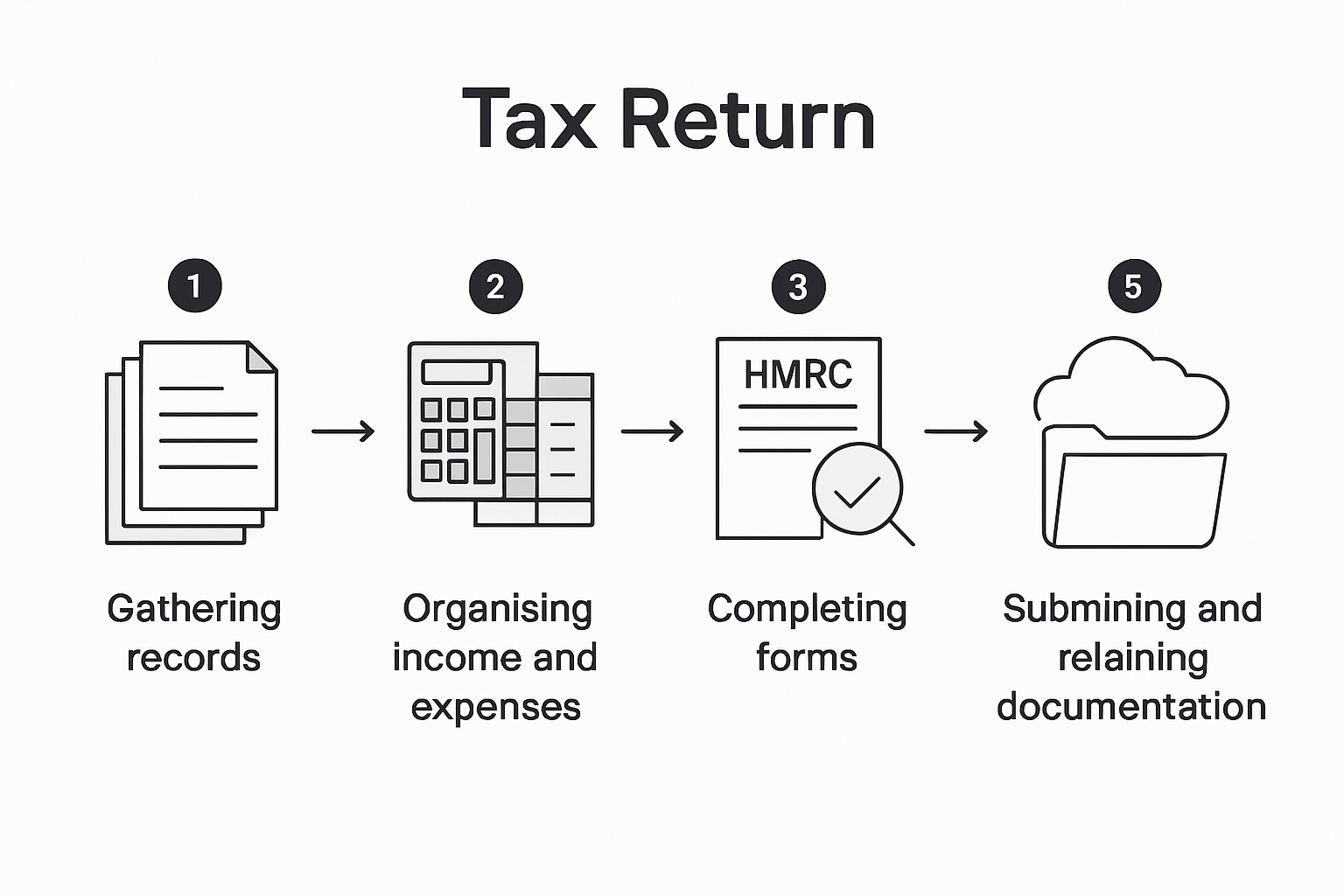
Key Insight | Explanation |
1. Gather essential financial records | Compile sales invoices, purchase receipts, and bank statements to reflect your business’s financial activities accurately. |
2. Organise income and allowable expenses | Maintain systematic records of all business income and expenses, ensuring they are clear and compliant with HMRC guidelines. |
3. Complete HMRC tax return forms accurately | Use HMRC guides and resources to fill out your tax return correctly, paying attention to detail and ensuring all figures are consistent. |
4. Double-check entries and calculate liabilities | Review your tax return meticulously, verifying figures against original documents to prevent costly errors and ensure accurate tax calculations. |
5. Retain documentation for future reference | Keep all tax-related records for at least five years post-submission to protect against possible inquiries from HMRC and ensure compliance. |
Step 1: Gather required financial records
Preparing your tax return requires a systematic approach to collecting and organising your financial documentation. The key is to compile a comprehensive set of records that accurately reflect your business’s financial activities for the tax year.
Start by gathering all essential financial documents, including sales invoices, purchase receipts, bank statements, payroll records, and expense documentation. Businesses must maintain digital records of their income and expenses under the Making Tax Digital initiative, which means tracking transaction details such as amount, date, and category. Your records should be precise and organised, covering all business transactions throughout the tax year.
Pro tip: Create a dedicated digital folder or use accounting software to store these documents systematically. Remember that self-employed individuals must keep these financial records for at least five years after the tax year’s submission deadline. This practice not only ensures compliance with HMRC regulations but also provides a clear financial trail that can be crucial during potential audits or reviews.
Once you have gathered all necessary documents, you will be well-prepared to move forward with calculating your business’s taxable income and completing your tax return accurately.
Step 2: Organise income and allowable expenses
Organising your business income and expenses is a critical step in preparing an accurate tax return. Your goal is to create a clear, systematic record of all financial transactions that HMRC will find transparent and compliant.

When using the cash basis accounting method, you should record income only when it is actually received and expenses when they are paid. Allowable expenses include day-to-day running costs like electricity, fuel, administrative expenses such as stationery, and purchases of goods for resale. It is crucial to be consistent in your recording method throughout the tax year.
Pro tip: Self-employed individuals must carefully report all business income and allowable expenses, ensuring that expenses are necessary, appropriate for the business, and not excessive. For costs that are both personal and business-related, you will need to apportion them accurately. Consider using spreadsheets or accounting software to track these expenses systematically, which will make your tax return preparation smoother and help you maintain precise financial records.
With your income and expenses meticulously organised, you are now ready to move on to the next stage of your tax return preparation.
Step 3: Complete the HMRC tax return forms
Completing your HMRC tax return forms requires precision and careful attention to detail. This critical stage transforms all your meticulously gathered financial information into an official submission that determines your tax liability.
HMRC provides comprehensive helpsheets and guidance to assist self-employed individuals in accurately completing the self-employment section of their Self Assessment tax return. These resources include detailed instructions on reporting income, claiming expenses, and understanding available tax reliefs. You can access additional support through HMRC’s YouTube videos and webinars, which offer step-by-step walkthroughs of the tax return process.
Pro tip: When transferring information from your business accounts to the tax return, refer to the HS229 helpsheet for ensuring consistent and accurate figure entry. Pay special attention to the Standard Accounts Information section, ensuring each financial detail is recorded precisely. Double-check all entries and calculations before submission to minimise the risk of errors that could trigger further scrutiny from HMRC.
With your tax return forms now complete, you are one step closer to meeting your tax obligations and maintaining good standing with the tax authorities.
Step 4: Double-check entries and calculate liabilities
Verifying your tax return entries and calculating your final tax liability is the most crucial stage in ensuring accurate financial reporting. This meticulous review can potentially save you from costly errors and unexpected tax assessments.
The Business Profits Toolkit highlights common errors in tax returns and provides essential guidance for accurately reporting business profits. When reviewing your entries, systematically cross-reference each financial figure with your original documentation, checking income statements, expense records, and supporting receipts to confirm their accuracy.
Pro tip: Create a comprehensive checklist to methodically review each section of your tax return. Verify calculations by using spreadsheet formulas or tax calculation software to minimise human error. Pay special attention to areas where businesses frequently make mistakes such as expense categorisation, income reporting, and tax relief claims. Consider setting aside dedicated time for this review process, preferably when you are alert and can focus without distractions.
Once you have thoroughly verified every entry and calculated your tax liabilities, you are prepared for the final submission of your tax return to HMRC.
Step 5: Submit return and retain documentation
Submitting your completed tax return marks the final crucial stage in your annual tax reporting process. This moment represents the culmination of your careful financial preparation and documentation gathering.
Once you have submitted your return online through the HMRC portal, your immediate next step is documentation management. Self-employed individuals must retain all tax-related records for at least five years after the 31 January submission deadline of the relevant tax year. These records should include comprehensive documentation such as invoices, receipts, bank statements, and any supporting financial evidence that substantiates the information submitted in your tax return.
Pro tip: Create a dedicated digital and physical filing system for your tax documentation. Consider using cloud storage with secure backup and maintaining both digital and physical copies of critical financial records. Organise your documents chronologically and ensure they are easily accessible should HMRC request a review. By maintaining meticulous records, you protect yourself against potential future inquiries and demonstrate professional financial management.
With your tax return submitted and documentation safely stored, you have successfully navigated the complex process of annual tax reporting.
Simplify Your Tax Return Preparation with Expert Support
Preparing a detailed and accurate tax return can feel overwhelming with the demands of organising income, allowable expenses, and ensuring full compliance with HMRC requirements. Many business owners and self-employed individuals struggle with maintaining precise records and confidently submitting their returns to avoid costly errors or audits. You do not have to face these challenges alone – expert guidance can streamline the entire process and provide peace of mind.

Discover how Concorde Company Solutions can help you navigate every step of your UK tax return with trusted accounting services tailored to your business needs. Whether you need assistance with bookkeeping, company tax returns, or payroll management, our personalised support ensures your financial records are accurate and your tax obligations are clearly met. Don’t wait until the submission deadline approaches; take control of your financial management today by visiting our website and exploring how our dedicated team in Leeds can make a real difference. Make the first step towards stress-free tax returns and reliable financial compliance now.
Frequently Asked Questions
What financial records do I need to prepare my tax return?
You need to gather essential financial documents such as sales invoices, purchase receipts, bank statements, payroll records, and expense documentation. Collect and organise these records systematically to reflect all business transactions for the tax year.
How do I organise my business income and expenses for my tax return?
Organise your business income and allowable expenses by accurately recording transactions marked by date and category. Use spreadsheets or accounting software to track these details efficiently, maintaining consistency in your recording method throughout the year.
How can I complete the HMRC tax return forms correctly?
To complete the HMRC tax return forms accurately, refer to HMRC’s guidance and helpsheets specifically for self-employed individuals. Pay close attention to details such as income reporting, claiming expenses, and tax reliefs, ensuring every figure is entered consistently from your financial records.
What should I do to verify my tax return entries before submitting?
To verify your tax return entries, cross-reference each entry with your original documentation and use a checklist to ensure nothing is missed. This process helps identify any potential errors, allowing you to correct them prior to submission.
How long should I keep my tax-related records after submission?
You must retain all tax-related records for at least five years after the submission deadline of your tax return. Create a dedicated filing system to store all necessary documents such as invoices and receipts, making them easily accessible in case of a review.
Recommended


Comments